
This article was originally published by The Philadelphia Citizen.
May 28, 2026
By Emily Schapira and Sharon Pillar
At Share Food Program’s Hunting Park headquarters, huge energy-sucking refrigeration units are essential for delivering fresh, healthy food throughout the region.
Share is one of the leading hunger relief organizations in Greater Philadelphia and among the largest independent food banks in the country. With energy prices soaring, every dollar Share spends on utilities is one less dollar available for emergency food assistance for vulnerable families.
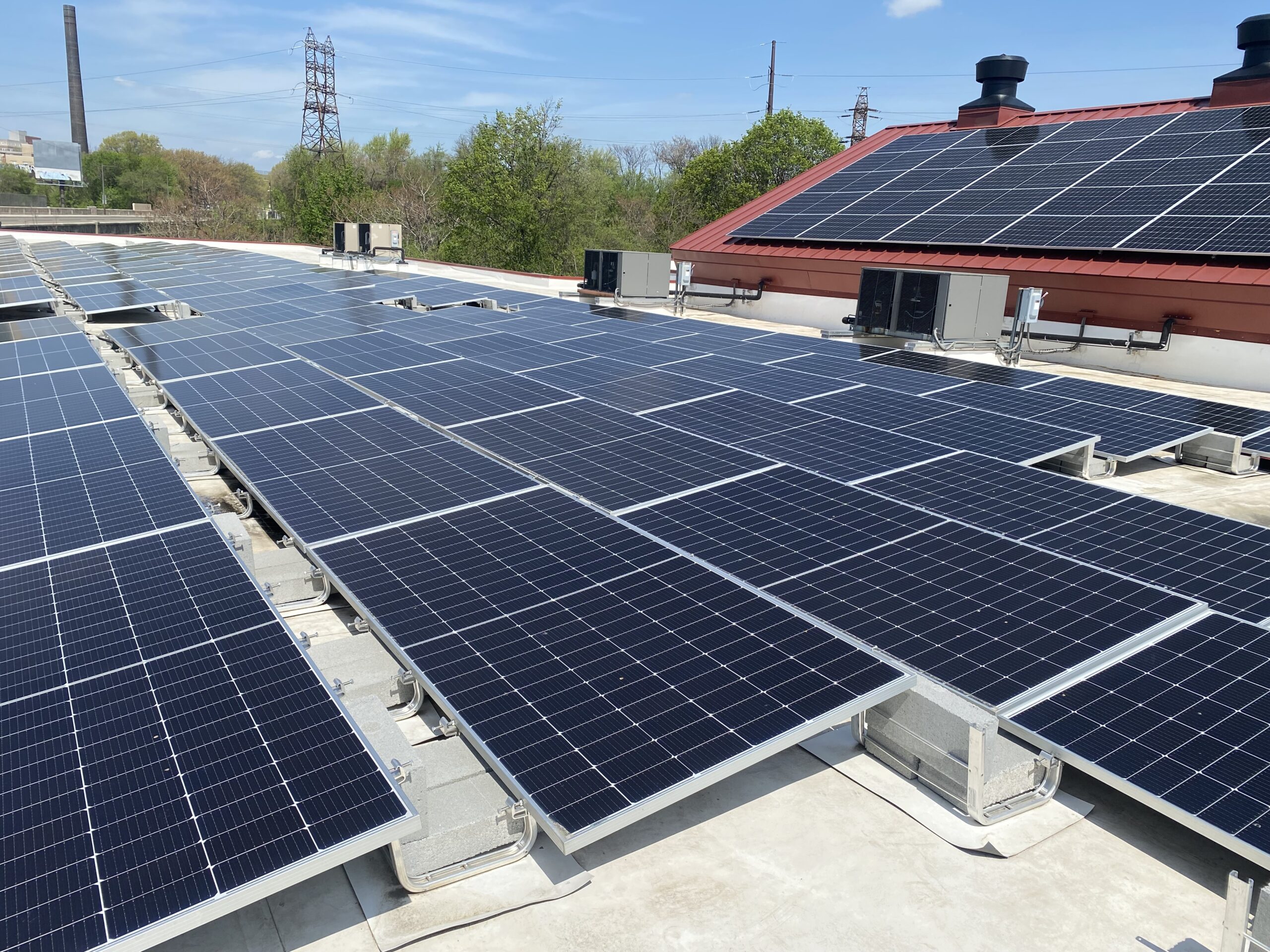
That’s why Share made the prudent investment of going solar, this year installing one of the largest rooftop arrays in the city. Solar energy offers a solution as many nonprofits and local businesses are squeezed both by rising energy prices and, as a result of increasingly severe weather, by unpredictable heating and cooling costs.
Solar energy is one of the most effective tools for stabilizing overhead costs. PECO bills are up more than 21 percent. PGW’s latest rate hike increased average customer bills by over 6 percent. Additional increases are likely in the years ahead, as oil, natural gas, and electricity prices climb.
It is now cheaper and faster to deploy solar energy than ever before. And, with the help of incentives, solar energy is affordable for nonprofit, business and residential property owners for buildings of all sizes.
Many organizations save tens to hundreds of thousands of dollars every year after going solar. Savings will likely increase as electric rates continue to climb due to aging utility infrastructure, inflation, global affairs, climate impacts, and widespread use of AI tools.
For small- and mid-sized businesses and nonprofits, the stakes are especially high. Unlike large corporations, most local companies and organizations operate on thin margins and have limited ability to absorb sudden cost increases. Surveys from the National Federation of Independent Business frequently cite energy expenses as a major and unpredictable line item.
Regional data tells a similar story. Research from the Federal Reserve Bank of Philadelphia has shown that businesses across the Mid-Atlantic region continue to face pressure from rising input costs, workforce expenses, and supply chain volatility. When every other cost — from insurance to rent to payroll — is trending upward, stabilizing even one major expense can make a real difference.
Philadelphia’s experience shows the scale of what’s possible. The Philadelphia Energy Authority (PEA), an independent municipal authority, has helped more than 4,500 households, businesses, and local institutions like the Share Food Program lower their utility costs through rooftop solar. Even the City of Philadelphia now powers 30 percent of its own electricity supply through renewable energy and, in the process, saves taxpayers millions.
Innovative financing models allow property owners to receive benefits of solar energy without paying upfront costs. Financing combined with federal tax incentives can further reduce long-term costs. The upcoming discontinuation of certain federal incentives, however, adds complexity.
The federal investment tax credit can reduce the cost of going solar by 30 percent. The window to take advantage of the credit has changed following passage of last year’s One Big Beautiful Bill Act. Non-residential property owners must purchase solar equipment by July 3, 2026 to qualify. Local nonprofits and businesses should act before Independence Day if they want to maximize available incentives.
Because of the short timeframe remaining for the 30 percent tax credit, PEA has partnered with the non-profit Pennsylvania Solar Center to ensure that any local nonprofit or business who wants to reduce utility costs over the long term has an opportunity to do so. Those interested should visit SolarizeGreaterPHL.org to access solar consulting assistance. PEA and the PA Solar Center can help determine the property’s solar feasibility, calculate estimated savings, find qualified solar developers, and explore financing options
Rising energy bills aren’t going away. Adding solar power allows nonprofits and businesses to lock in predictable electricity costs for decades, all while creating jobs and strengthening local economies. Property owners who can install solar should consider doing so now while federal incentives remain available.
Emily Schapira is President and CEO of the Philadelphia Energy Authority. Sharon Pillar is Founder and Executive Director of the Pennsylvania Solar Center.